#英国工作

6 articles with this tag

Job-hunting Journey & Experience After Graduating and Joining a Bootcamp
Case study

Job-hunting Journey & Experience After Graduating and Joining a Bootcamp

A Mathematics graduate with distinction who transitioned into tech from a MATLAB-only background. Faced multiple rejections at video interview and assessment centre stages, and went through periods of anxiety during the job search, but continued self-learning coding — from Java and LeetCode to JavaScript and React. Later joined a full-stack bootcamp, worked on several frontend and backend projects, and eventually secured a role in tech. Now sharing real experiences about breaking into tech to offer insights and encouragement to others on a similar path.

Feb 01, 2026 3 min read

Is finding a job in the UK insanely difficult?
Case study

Is finding a job in the UK insanely difficult?

Job-hunting difficulty isn’t about nationality — it’s about strategy. A CV is not an autobiography; it should be tailored to the Job Description (JD), highlighting keywords and relevant experience. Recommended CV structure: professional summary → key skills → work experience (focus on impact) → education. Keep it 1–1.5 pages with clean formatting. Choose targeted applications over mass applications, and slightly tailor your CV for each JD. Use AI as a tool, but you must give clear instructions and judge the quality of the output.

Feb 01, 2026 3 min read
Experience Sharing: My Job Search in the UK
Case study

Experience Sharing: My Job Search in the UK

This article shares practical experience and advice on job hunting in the UK. The author emphasizes that choosing a major based on genuine interest is more important than following job market trends, and long-term commitment matters more than short-term popularity. The key to finding a job in the UK is having a strong determination to stay and consistently investing time and effort. Early preparation is essential, especially crafting strong CVs and cover letters tailored to each role. Three main job-search channels are highlighted: career fairs, university career services, and online applications. Applicants should avoid mass applications, carefully screen positions, update their CVs regularly, and track job postings alongside skill development. The core message is that proactiveness, customization, and persistence are crucial for successful job hunting in the UK

Feb 01, 2026 4 min read
Job hunting from China: How I landed a UK big company offer in 2 months 🇬🇧 (Experience Sharing V)
Case study

Job hunting from China: How I landed a UK big company offer in 2 months 🇬🇧 (Experience Sharing V)

You can apply for UK jobs from your home country even without a visa. Timing in autumn recruitment is crucial: getting an AC before Christmas and an offer around the New Year is ideal, as requirements may be less strict; late ACs mean fewer roles and tougher competition. Focus on campus recruitment and company websites, and also use platforms like LinkedIn, Glassdoor, and Indeed. Prioritize preparing for tests and interviews; perfect English isn’t necessary — strong content and skills matter more. Courage and action are key to landing an offer.

Feb 01, 2026 2 min read
Notes on Job Hopping
Case study

Notes on Job Hopping

These job-hopping notes stress that in a weak market with tighter visa policies, experienced-hire job searches require both high-volume applications and a resilient mindset. Rejections are normal and often unrelated to ability, so consistency and learning from interviews matter most. Use LinkedIn strategically with job and skill alerts, and proactively connect with recruiters. Prepare 2–3 tailored, well-polished CVs that highlight keywords and impact. Ultimately, treat the search as a journey, stay positive, and remember you only need one final offer.

Feb 01, 2026 2 min read
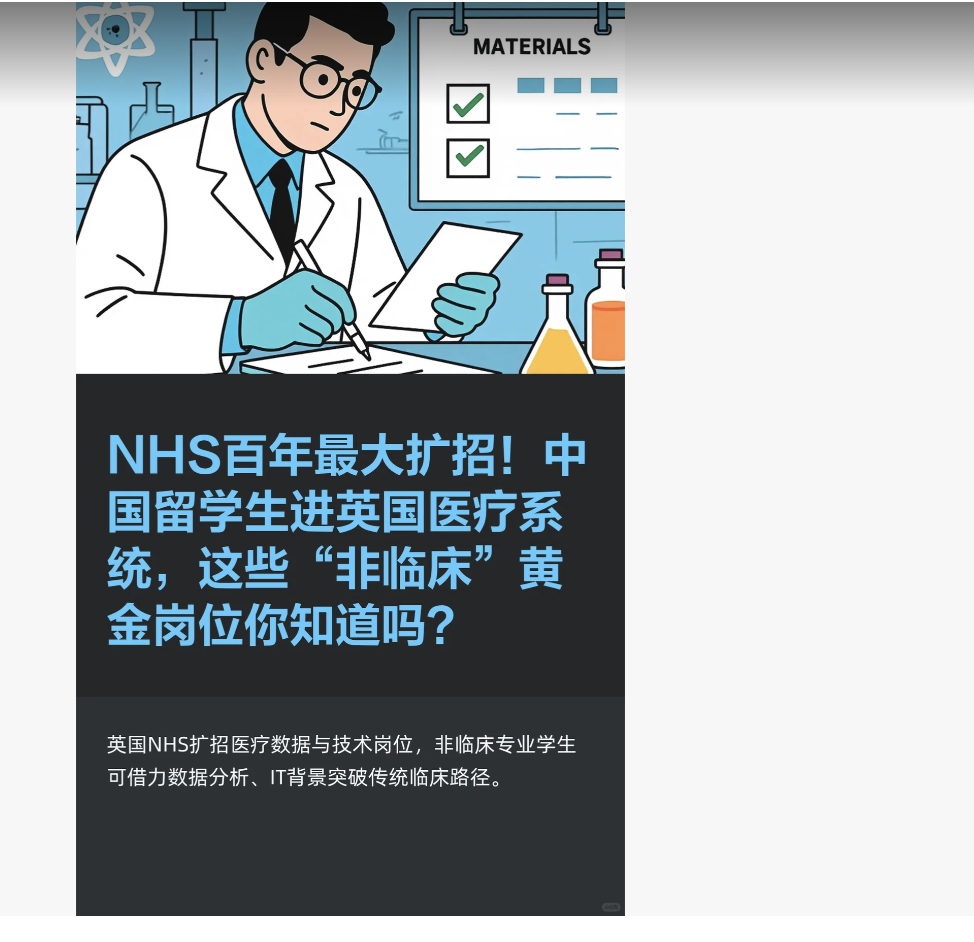
NHS’s Biggest Expansion in a Century! Chinese Students Entering UK Healthcare
Case study

NHS’s Biggest Expansion in a Century! Chinese Students Entering UK Healthcare

The NHS is undergoing its largest expansion in a century, focusing not only on recruiting clinicians but also on digital transformation and efficiency improvements. This creates new opportunities for Chinese international students, especially those from non-clinical backgrounds. Beyond traditional clinical routes, demand is growing in healthcare data, information systems, AI, operations management, supply chain, and patient experience roles. Non-clinical students can boost competitiveness through relevant coursework, healthcare-related projects, internships, and certifications. Combining technical skills with healthcare knowledge is a key advantage for Chinese students.

Feb 01, 2026 2 min read