
Rejected by ATS 100 Times: The Hard Lessons I Learned About Resume Screening
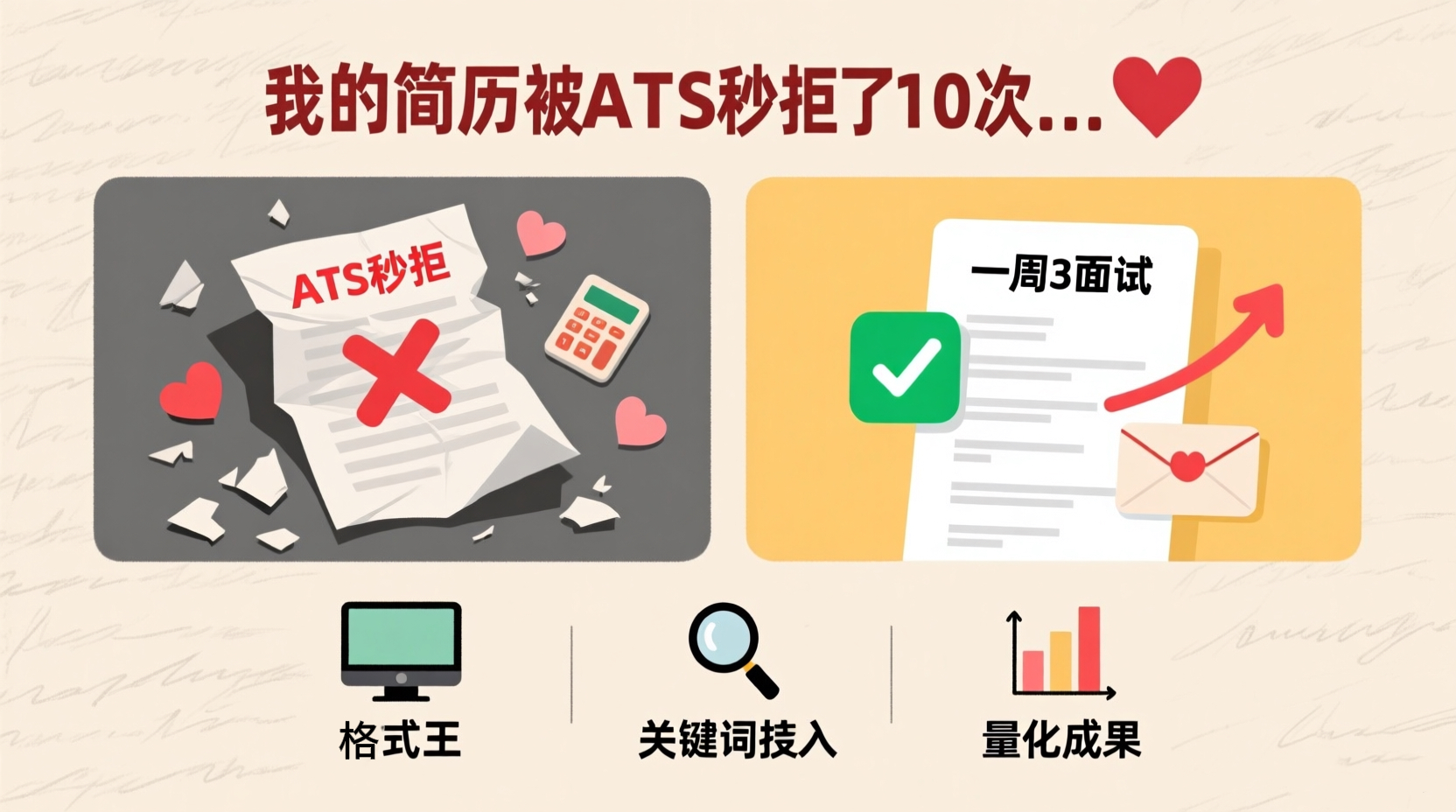
After two months of mass applications with zero responses, I was convinced my background simply wasn’t good enough.
That belief collapsed after a casual conversation with a senior student working in investment banking HR. While I was helping her with a translation, she asked one simple question:
“Is your resume saved as a PDF? And are you using headers or footers?
ATS systems often can’t read those properly.”
I froze.
ATS? What was that?
She looked at me and sighed:
“You’ve been job hunting without knowing what ATS is?”
That was the moment everything started to make sense.
What I Didn’t Know About ATS
More than 70% of large companies use Applicant Tracking Systems (ATS) to screen resumes before a human ever sees them.
If your formatting is incompatible, or your keywords don’t match the job description, your resume is irrelevant — no matter how strong your profile is.
That’s when I realised the truth:
many of my applications hadn’t been rejected —
they had simply never been seen by a human.
My Resume, Through an ATS Lens
I went home and reviewed my resume.
Two-column layout.
Colourful icons.
Carefully designed sections.
To an ATS system, it wasn’t “well-designed”.
It was unreadable.
Three ATS-Proven Rules That Finally Worked
After rebuilding my resume from scratch — and testing it in real applications — here are the three principles that helped both ATS and recruiters say “yes”.
1. Formatting: Be Robot-Friendly Before Being Human-Friendly
I used to believe resumes needed to look beautiful.
That was a costly mistake.
What works:
Single-column layout
Plain text structure
Standard fonts (e.g. Calibri)
Clear section headings (Experience, Education, Skills)
What to avoid completely:
Tables
Text boxes
Icons or graphics
Headers and footers
The reality check:
Save your resume as a .txt file.
If the formatting collapses, that’s exactly how an ATS reads it.
2. Keywords: Become a “Job Description Echo”
Stop describing yourself in your own words.
Recruiters hide signals inside job descriptions.
If a JD repeatedly mentions “Python” or “data analysis”, those exact terms must appear naturally in your experience.
Instead of vague claims like:
“Strong teamwork skills”
Write:
“Collaborated with a team of four to analyse data and deliver insights…”
Use the verbs and nouns from the JD. Let the system recognise you.
3. Storytelling: Don’t Say What You Did — Show What You Achieved
Numbers change everything.
Before:
“Managed a student society’s social media account”
After:
“Independently managed a student society’s social media account, increasing followers by 500+ within one month through three themed campaigns, and improving engagement by 20%.”
Metrics prove value — and that’s what makes recruiters pause.
The Result
I rewrote my resume using these principles and re-applied to companies that had previously rejected me.
Within one week, I received three interview invitations.
One of them later turned into the offer I accepted.
Final Thought
If you’ve been applying endlessly with no response, don’t rush to doubt yourself.
First, ask this question:
Is your resume human-friendly, or machine-readable?
That small shift might be the key that unlocks everything.
If my painful detour helps you take a shortcut, it was worth it.