
From Zero to Three Recruiter Messages in a Week: How to Use LinkedIn the Right Way
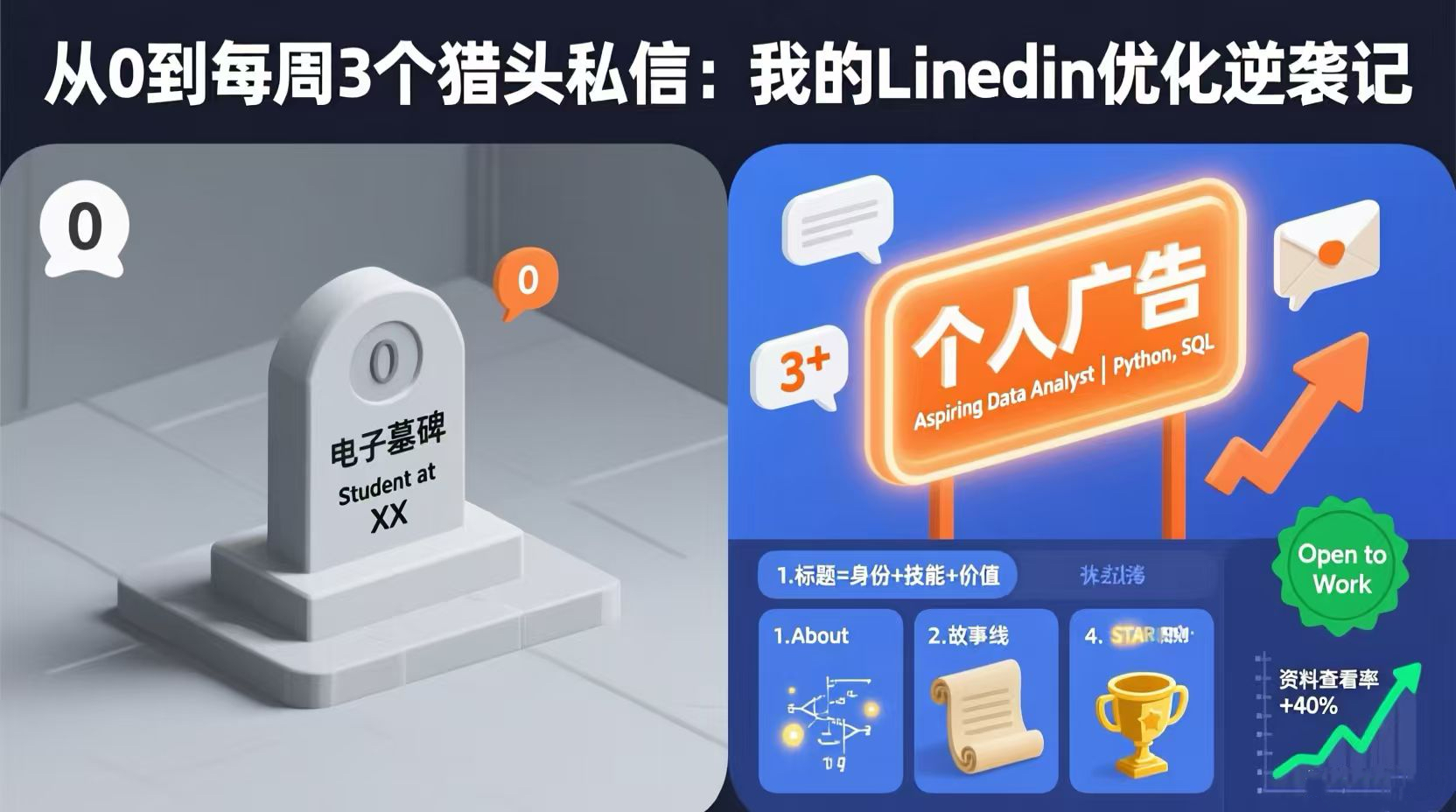
When I first arrived in the UK, everyone told me LinkedIn was important. I registered, filled in my university and programme, pasted the link into my CV — and assumed the job was done.
A year later, my profile views were close to zero.
It felt like an abandoned digital graveyard.
Everything changed after a senior student working at Deloitte looked at my profile and said bluntly:
“This is almost the same as having nothing. No wonder nobody reaches out.”
She gave me an analogy I still remember:
LinkedIn isn’t a storage folder for your career history.
It’s your 24/7 personal billboard — and one of the strongest tools for passive job search.
Under her “intense training”, I rebuilt my profile from scratch. The result surprised me: in the second week after optimisation, I received my first recruiter message. Since then, I’ve been contacted regularly with relevant opportunities.
Here’s exactly what I changed.
1) Headline: Stop Writing “MSc Student at X”
Your headline is premium real estate. It should tell both LinkedIn’s algorithm and human readers:
who you are
what you can do
what role you’re targeting
Before (what many students write):
“MSc Student at University of XXX”
After (formula: Target Role + Core Skills + Differentiator):
“Aspiring Data Analyst | Proficient in Python, SQL & Power BI | Seeking Graduate Roles”
This one change made my profile instantly more focused — I stopped looking like a “generic student” and started looking like a candidate with direction.
2) About Section: Replace Cold Lists with a First-Person Story
This section is not a copy of your CV.
Use first person to create a clear narrative:
One sentence to set the tone
“A detail-oriented finance graduate passionate about using data analytics to decode market trends.”
One short proof point (project + tools + outcome)
Pick one strong project and explain what you did, what tools you used, and what result you achieved — even if it’s from coursework.One clear goal
Make it easy for people to help you:“Actively seeking entry-level roles in investment analysis or related fields.”
If someone is interested, they should immediately know what you want.
3) Experience: Use STAR to Show Achievements (Not Duties)
Avoid writing job responsibilities — that reads like a job description, not your impact.
For each role or experience, write 2–3 bullet points that:
start with a strong action verb
include measurable results when possible
Before:
“Responsible for event planning and communication.”
After:
“Led a team of five to organise a career-sharing event, attracting over 80 participants and increasing society membership by 30%.”
Instantly more concrete. More credible. More memorable.
4) Two Actions That Multiplied Opportunities
Skills + Endorsements
I listed my relevant tools and skills (up to 15). Then I politely asked classmates and project supervisors who knew my work to endorse a few of them. It seems small, but it significantly improves visibility in search.
Turn On “Open to Work” (Recruiters Only)
This is a game changer. You can enable it so only recruiters can see it, then set:
target job titles
preferred locations
start dates
After turning this on, I started receiving messages far more consistently.
The Mindset Shift
I used to treat LinkedIn like homework: submit it once and forget it.
Now I see it for what it is — a personal branding window that speaks for you when you’re not there.
Instead of waiting to be noticed, I designed my profile to attract opportunities passively.
Don’t let your profile stay dormant. Spend one focused afternoon refining it with these steps — the next opportunity might arrive sooner than you think.