
What Skills Will You Need by 2030? A Five-Year Survival Guide for the UK Job Market
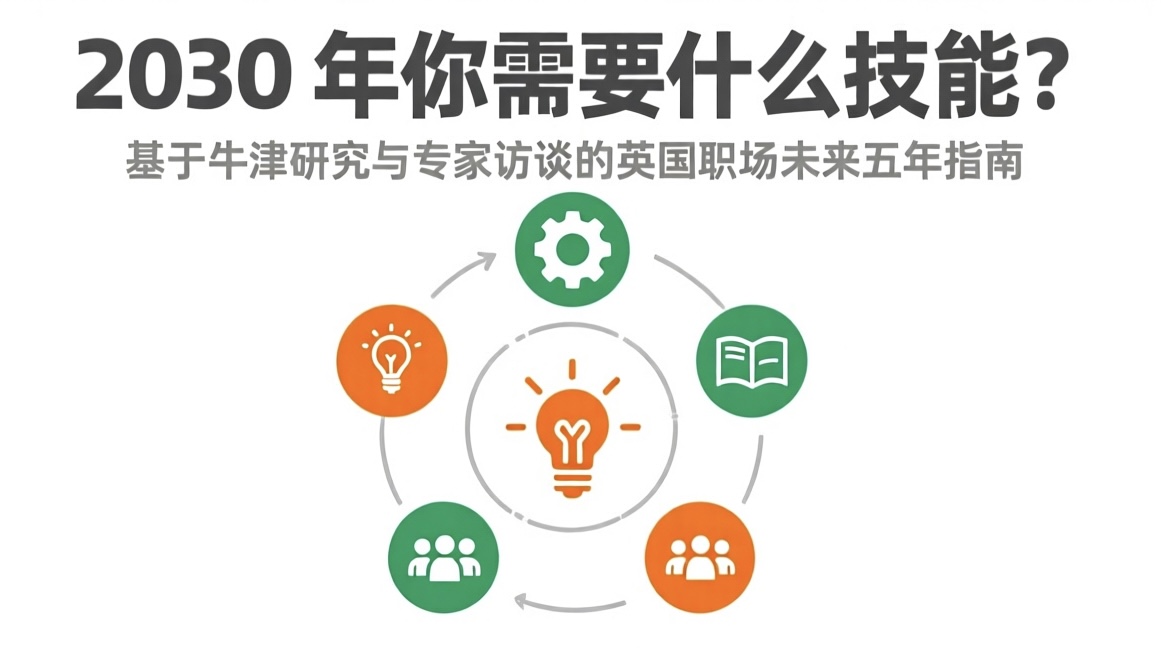
Predicting the future is not about creating anxiety—it is about preparing early.
By combining insights from employment-futures research at University of Oxford, UK government skills reports, and interviews with industry leaders, a clearer picture of the UK job market in 2030 begins to emerge.
Your long-term career resilience will be shaped by the choices you make today.
The Evolution of Work: From “Jobs” to Task Portfolios
Work is increasingly organised around projects and task bundles, rather than fixed job descriptions.
Organisations will operate more like platforms, while individuals function as independent service providers with specialised skill sets.
Career stability will come less from job titles and more from adaptable capabilities.
High-Growth Demand Areas
Health and Wellbeing
Ageing populations and rising awareness of mental health are driving demand for:
Remote healthcare coordinators
Mental health coaches
Elderly-focused technology experience designers
Green Transition
Net-zero commitments are creating sustained demand for roles such as:
Carbon footprint and emissions auditors
Circular materials sourcing specialists
Climate risk modelling analysts
Human–AI Collaboration
As AI adoption expands, new roles continue to emerge:
AI trainers and prompt engineers
Automation workflow supervisors
Human–AI ethics and governance advisors
Infrastructure Development and Maintenance
Both digital and physical infrastructure require long-term human expertise:
Fibre network engineers
Renewable energy equipment maintenance technicians
Digital restoration specialists for historical buildings
Areas Under Increasing Transition Pressure
Routine Cognitive Work
Basic data analysis, report generation, and translation tasks are increasingly augmented by AI, reducing demand for entry-level human labour.
Mid-Level Administrative and Managerial Roles
Certain coordination and supervision functions may be replaced by digital platforms and flatter organisational structures.
Traditional Retail and Customer Service
Automated checkouts and AI-driven customer support will replace routine roles, while remaining positions will require stronger emotional intelligence and complex problem handling.
The Essential “Meta-Skills” for the Next Five Years
These foundational capabilities transcend specific professions:
Digital literacy
Not coding expertise, but the ability to use digital and AI tools effectively to solve problems and create value.Climate literacy
Understanding the scientific, economic, and social dimensions of climate change and sustainability.Social intelligence
Advanced empathy, communication, collaboration, and negotiation skills.Cross-cultural competence
The ability to work effectively across cultures in global and remote teams.Adaptive learning and resilience
A willingness to continuously learn and adjust strategies in response to change.
A Practical Five-Year Action Plan
Annually:
Learn one new technical tool (e.g. low-code platforms or data visualisation) and deepen one soft skill (e.g. conflict mediation or public speaking).Quarterly:
Conduct a personal “skills audit.” Identify which skills are increasing or declining in value and adjust learning priorities accordingly.Continuously:
Build a network of weak ties across industries and functions. Future opportunities often emerge from unexpected connections.
Final Thought
The future has already arrived—it is simply unevenly distributed.
Those who identify trends early and act on them will retain the greatest freedom of choice.